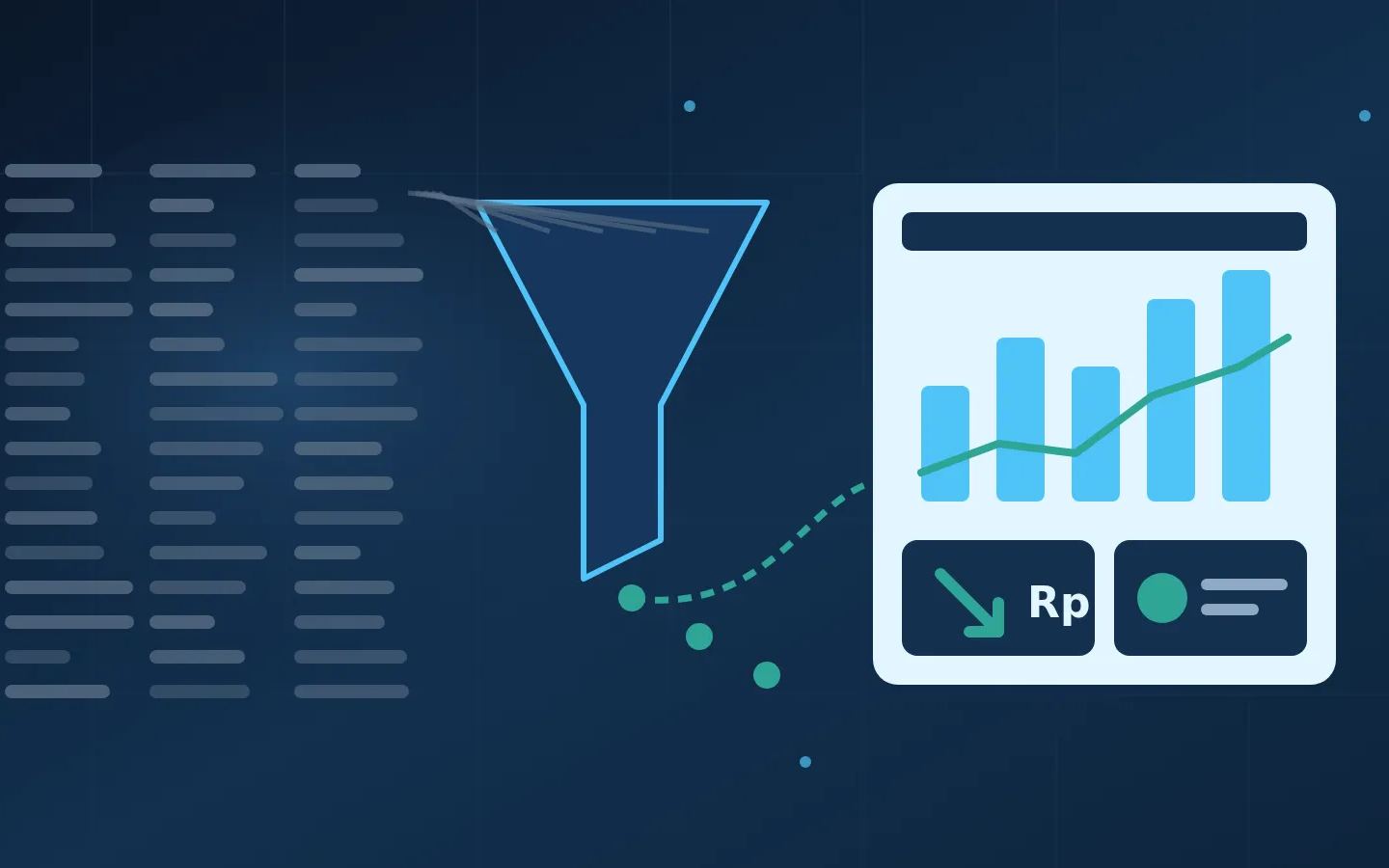
On 13 October 2026, at Workday Rising, Workday announced that Workday Data Cloud is now generally available. The promise is simple: teams and AI agents can query live HR and finance data directly in SQL, without extracts, without stale data copies, and with access rules still attached. A few months earlier, Google Cloud introduced the borderless Lakehouse, which lets BigQuery read tables in AWS Glue, Databricks and Snowflake without moving the files.
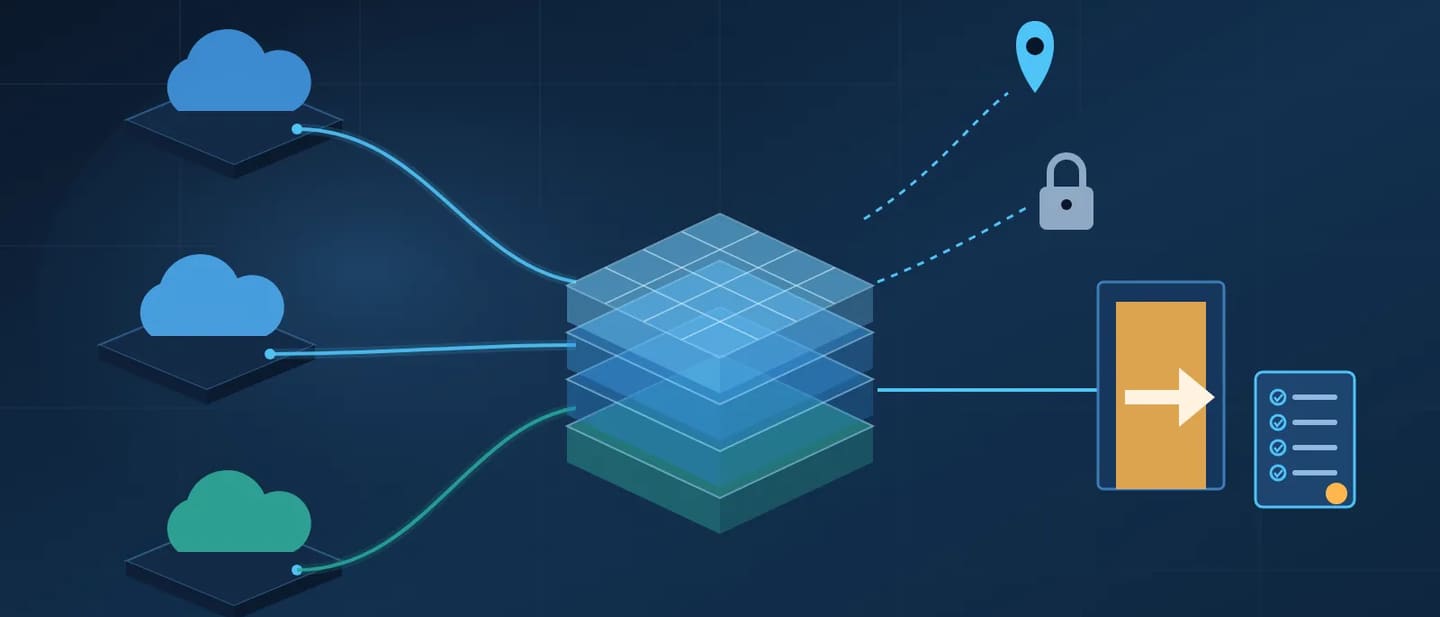
The direction is the same: from "copy all your data into our warehouse" to "query the data where it lives". For organisations tired of maintaining fragile ETL pipelines, that is good news. But zero-copy does not mean zero risk. The old questions remain: who holds the data, where the copies sit, what it costs to get out, and how you would move if one day you had to.
What has actually changed
Two technical shifts are driving this trend.
- Open table formats. Apache Iceberg stores data as Parquet files in object storage, together with table metadata. Because the format is open, several query engines can read the same table.
- Catalogues with a standard interface. The Iceberg REST catalog has become a shared front door. According to Google Cloud's documentation, Lakehouse synchronises metadata from remote catalogues, vends scoped temporary credentials, and then reads data blocks directly from the original storage.
Workday is taking a similar path at the application layer. In its press release, Workday says Live Data Query carries its security and business rules into every request, so a BI dashboard and an AI agent get answers from the same source. In its launch blog, Workday names the open standards underneath: Apache Iceberg and Trino query federation.
Three small notes that are easy to miss
Brochures rarely cover the following details, yet this is where architecture decisions get tested. The examples come from Google Cloud's own documentation.
- A cache is a copy too. To keep costs down, Lakehouse stores data blocks it has already read as a cache in the target Google Cloud region. The documentation is explicit: if the source data sits in another jurisdiction, the cached copy is still stored at rest in the target region, and whoever creates the connection must make sure that complies with the organisation's data residency rules. The cache also does not support customer-managed encryption keys (CMEK).
- Egress does not simply disappear. Queries over the public internet still incur standard egress charges from the source cloud. The claim of zero variable egress costs in Google Cloud's blog applies to accessing AWS data with Partner Cross-Cloud Interconnect pricing, and its footnote says customers pay an hourly fee for that interconnect service.
- Service status varies. Google's catalogue federation is still in Preview with limited support, while Workday Data Cloud is generally available. For critical systems, that status determines which SLA you can actually hold a provider to.
None of this is wrong. It simply means "without copying data" should be read as "fewer copies you maintain yourself", not "no copies at all".
The EU turns the exit into a contract clause
On the regulatory side, the European Union has gone a step further. The EU Data Act governs switching between providers of data processing services, including cloud. Under Article 25, the contract must be in writing and include, among other things:
- a maximum notice period of two months before switching starts;
- a maximum transitional period of 30 calendar days, or up to seven months if that is technically unfeasible, notified with reasons within 14 working days;
- an exhaustive list of the categories of data and digital assets that can be ported;
- a data retrieval period of at least 30 days after the transition, followed by full erasure.
Article 29 adds that from 12 January 2027, providers may no longer impose switching charges, including data egress charges. There is an important exception. According to the European Commission's FAQ, for in-parallel use such as multi-cloud, providers may still bill egress at cost, because the data flow is continuous.
What it means for organisations in Indonesia
The Data Act does not automatically apply to contracts in Indonesia. But its list of clauses works well as a checklist when you negotiate with a cloud or SaaS vendor. There is a local legal basis too: Article 13 of Indonesia's Personal Data Protection Law (UU PDP) gives data subjects the right to obtain their personal data in a commonly used or machine-readable format, and to transmit it to another controller. Being able to export data in a structured way is not only a commercial matter.
Six practical steps to start with:
- Map where data lives and where its copies are. That includes caches, exports, periodic reports, and data that AI agents read. This fits the spirit of the One Data Indonesia law: standards and metadata first, not one giant database.
- Choose open formats for important analytical data. Iceberg or Parquet make sense when the data is large and read by many tools. For small datasets, a well-run ordinary database is often enough. Do not migrate just to follow a trend.
- Write the exit plan into the contract. Which data can be exported, in what format, how long it takes, what it costs, and when it is erased. The Data Act clauses above make a good starting template.
- Price egress and interconnect costs before choosing a cross-cloud architecture. Make sure someone owns that budget, as we discussed in FinOps for organisations.
- Check residency and encryption keys for every copy. That includes caches and logs. We raised the same question for AI data retention.
- Test the exit regularly. Export one data domain, restore it in another environment, then measure the time and cost. An exit plan that has never been tested is only an assumption.
Where MarkasDev fits
MarkasDev works as a Technology Partner for operational reliability, in three phases:
- Diagnose: mapping source systems, data copies, egress flows, and the contract clauses that decide whether you can really move.
- Deliver: building systems integration and APIs, an open-format data layer where it is genuinely needed, and tested export scripts, with milestones and written acceptance criteria.
- Operate: a retainer with an SLA and monitoring, including tracking data transfer costs and running regular recovery drills.
If your operational data is spread across several clouds and applications, and it is not clear what it would cost or how long it would take to move it, book a Diagnose session before your next contract renewal.
Sources
- Workday, "Workday's Trusted Agent Platform Now Delivers Headless Access to HR and Finance" (13 October 2026): https://newsroom.workday.com/2026-10-13-Workdays-Trusted-Agent-Platform-Now-Delivers-Headless-Access-to-HR-and-Finance,-Letting-Customers-Build-and-Run-Lawful-AI-Agents
- Workday Blog, "Headless, Open, and Secure: Meet The New Workday Data Cloud": https://blog.workday.com/en-us/new-workday-data-cloud.html
- Google Cloud Blog, "Introducing the borderless Lakehouse" (29 July 2026): https://cloud.google.com/blog/products/data-analytics/introducing-the-borderless-lakehouse
- Google Cloud Documentation, "About cross-cloud data access" (updated 14 October 2026): https://docs.cloud.google.com/lakehouse/docs/about-borderless-lakehouse
- EU Data Act, Article 25 (contractual terms concerning switching): https://data-act-law.eu/article/25/
- EU Data Act, Article 29 (gradual withdrawal of switching charges): https://data-act-law.eu/article/29/
- European Commission FAQ on the Data Act, question 54 (via Data Act Kit): https://dataactkit.eu/docs/eu-faqs/switching-between-data-processing-services/what-is-the-deadline-for-providers-to-reduce-switching-charges-so-that-they-are-limited-to-the-costs-they-incur
- Article 13 of Law No. 27 of 2022 on Personal Data Protection: https://pasal.id/peraturan/uu/uu-no-27-tahun-2022/pasal-13