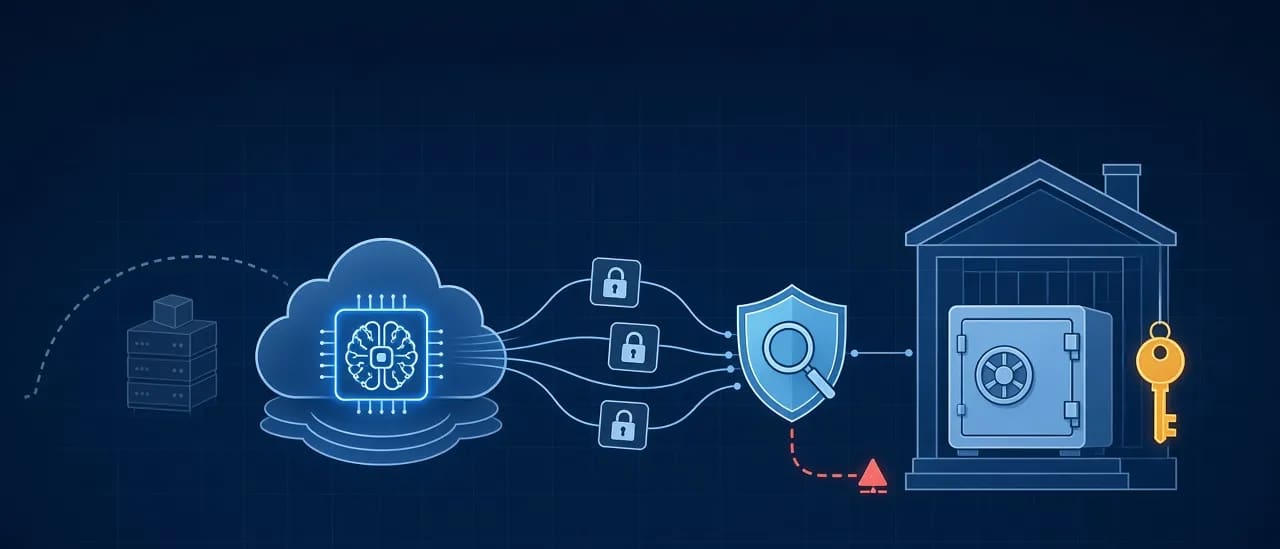
When your team pastes a contract, customer data, or source code into an AI model, there is a question that rarely came up in procurement meetings: once the answer comes back, is that prompt still stored, where, for how long, and who holds the keys? Over mid-2026, that question moved from a footnote in the terms of service to a point of negotiation between the largest AI model providers and their enterprise customers.
For leaders and operations managers in Indonesia, the shift matters because it moves part of the responsibility to the customer. More control comes with more work.
What has happened since June 2026
Anthropic announced that from 9 June 2026, prompts and outputs of what it calls covered models, meaning Mythos-class models and similar models it designates later, are retained for 30 days for safety work, on every platform where those models are offered. According to Anthropic's Privacy Center, the change affects organisations that previously used zero data retention (ZDR), an arrangement in which prompts and responses are not stored after processing. The reason given: some attacks only become visible when many requests are analysed together, such as jailbreak attempts that send hundreds of slight variations of a prompt.
The market pushed back hard. Fortune reported broad resistance from companies worried about their data and intellectual property leaking. Two responses followed, with a similar pattern:
- OpenAI, 19 August 2026, previewed Private Safety Processing (PSP) so it could keep offering ZDR. According to OpenAI's announcement, customer content stays on infrastructure the customer controls, automated systems look for misuse patterns across interactions, and OpenAI receives only a narrowly defined signal about the type of activity. A phased rollout began on 22 September 2026.
- Anthropic, 1 September 2026, announced Enterprise Frontier Safeguards (EFS). According to Anthropic's announcement, activity data used for monitoring is stored in the customer's own cloud account (Amazon S3, Azure Blob Storage, or Google Cloud Storage) under the customer's encryption keys, access policies, and audit logging. Flags go straight to the customer's team, with no human review by Anthropic required. EFS rolls out in phases starting this autumn, and eligible customers get ZDR on Fable 5 and Fable 5.1 in the meantime.
The pattern: data in your house, detection still running
|
OpenAI: ZDR with PSP |
Anthropic: EFS |
| Where data lives |
Customer cloud storage, per region |
Customer cloud account (S3, Azure Blob, GCS) |
| Keys |
Double encryption; outer layer uses customer keys (EKM, recommended) |
Customer-managed encryption keys (opt-in) |
| Retention |
At least 30 days, set by a lifecycle rule |
Rolling monitoring window |
| Findings |
Bounded signal to OpenAI; customer investigates |
Sent to the customer's team |
| Status |
Phased since 22 September 2026 |
Phased from autumn 2026 |
Both answer the same dilemma: the provider needs interaction history to detect misuse, while customers, especially in regulated sectors, do not want that history sitting on someone else's servers.
Control comes with responsibility
This is where operational detail starts to matter. OpenAI's technical guide requires customers to register and validate storage for every project and data residency location, keep encrypted records for at least 30 days, keep storage permissions and key access correctly configured, fix configuration problems when notified, and respond to notices about safety concerns. The guide also warns that a "Validated" status records one successful check, not ongoing storage health. One more detail that is easy to miss: PSP is enabled per project, so all API traffic in that project follows the same policy.
Anthropic does not charge for EFS, but the customer's cloud provider still bills for storage, reads, writes, and egress. A CISO quoted by Fortune put it well: you are trading control for responsibility. That is why some companies take a hybrid route: frontier provider models for some work, open models in their own environment for the most sensitive data.
What this means for organisations in Indonesia
Many organisations in Indonesia use AI through individual accounts or team subscriptions without ever checking the retention settings. Three points are worth noting.
First, the responsibility stays with you. Under Law No. 27 of 2022 on Personal Data Protection (the PDP Law), Article 51 says a processor must process data on the controller's instructions, and that processing remains the controller's responsibility. If an AI provider processes your customers' personal data, your organisation is still the one that has to answer for it.
Second, "stored in your cloud" does not necessarily mean "stored in Indonesia". For Azure, OpenAI's guide asks for an approved US or EU storage region; for AWS without data residency, the recommended region is us-west-1. That means the data still leaves the country, and Article 56 of the PDP Law applies: the receiving country must offer equal or higher protection, or there must be adequate and binding safeguards, or the data subject's consent.
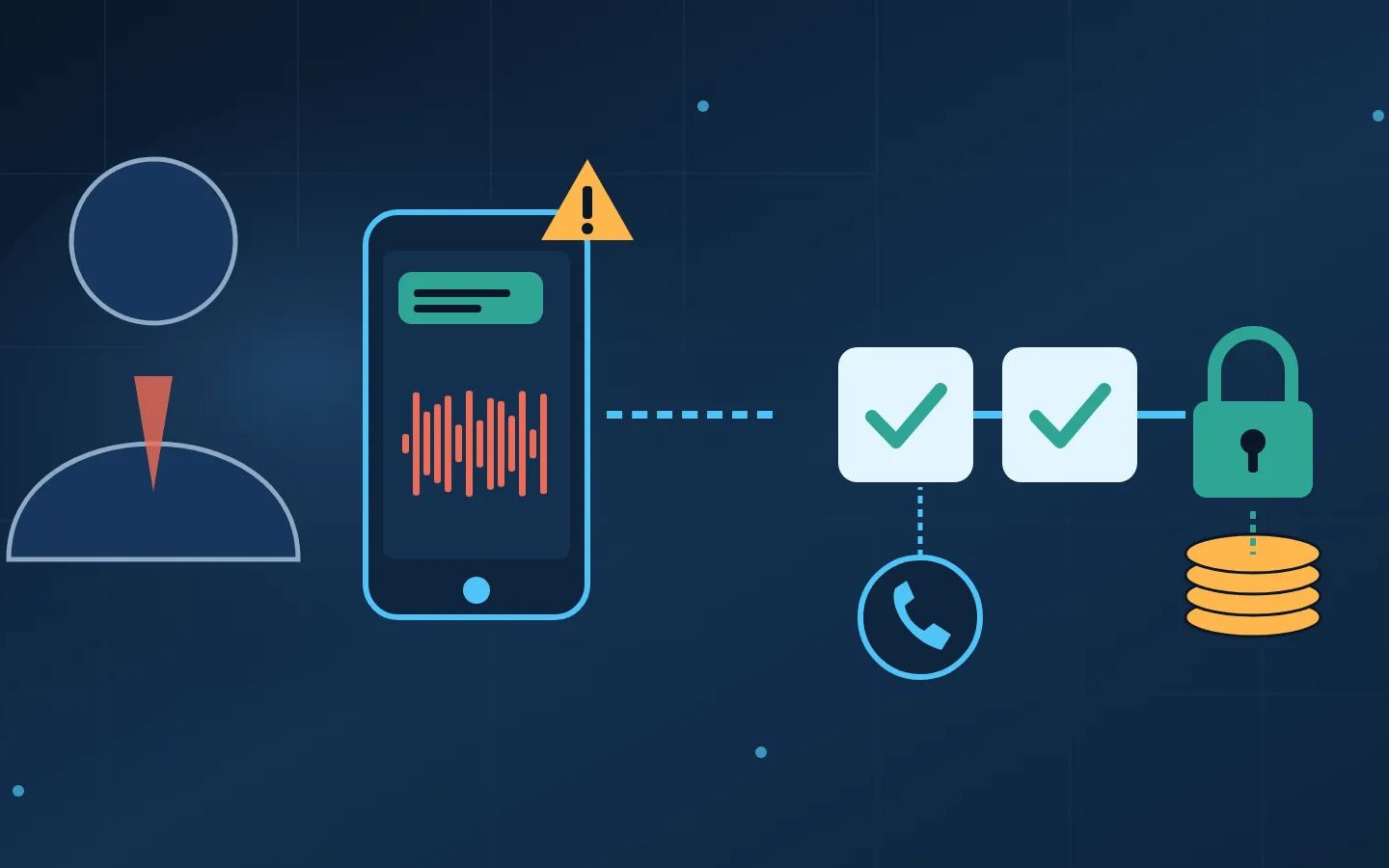
Third, misuse signals need a recipient. If findings are sent to your team, it must be clear who reads them, how fast, and what happens next. This follows the principle we covered in AI agents need access limits.
Practical steps you can start this week:
- Map your data flows into AI. Which tools are used, through which accounts, what kinds of data go in, and what the retention settings are.
- Classify by use case, not by vendor. Decide what may go to a frontier provider's API under ZDR and what must stay on a model you run yourself.
- Separate projects or workspaces. Work with different retention rules should not share a project.
- Set region, keys, and lifecycle rules in writing, then check them against Article 56.
- Feed misuse signals into your incident process, with an owner and a response deadline.
- Keep monitoring. Revalidate storage, review access logs, and track changes in provider policies.
At MarkasDev we split this work into three phases. Diagnose maps data flows, classification, and compliance gaps before budget is committed. Deliver builds the gateway, project separation, and storage under your keys, in milestones with written acceptance criteria, as part of our AI implementation service. Operate keeps storage validation, keys, and signal handling in check under an SLA.
If your organisation already uses AI but is not sure where its data goes, request a Diagnose through our contact page. We start from the tools your team is using today.
Sources