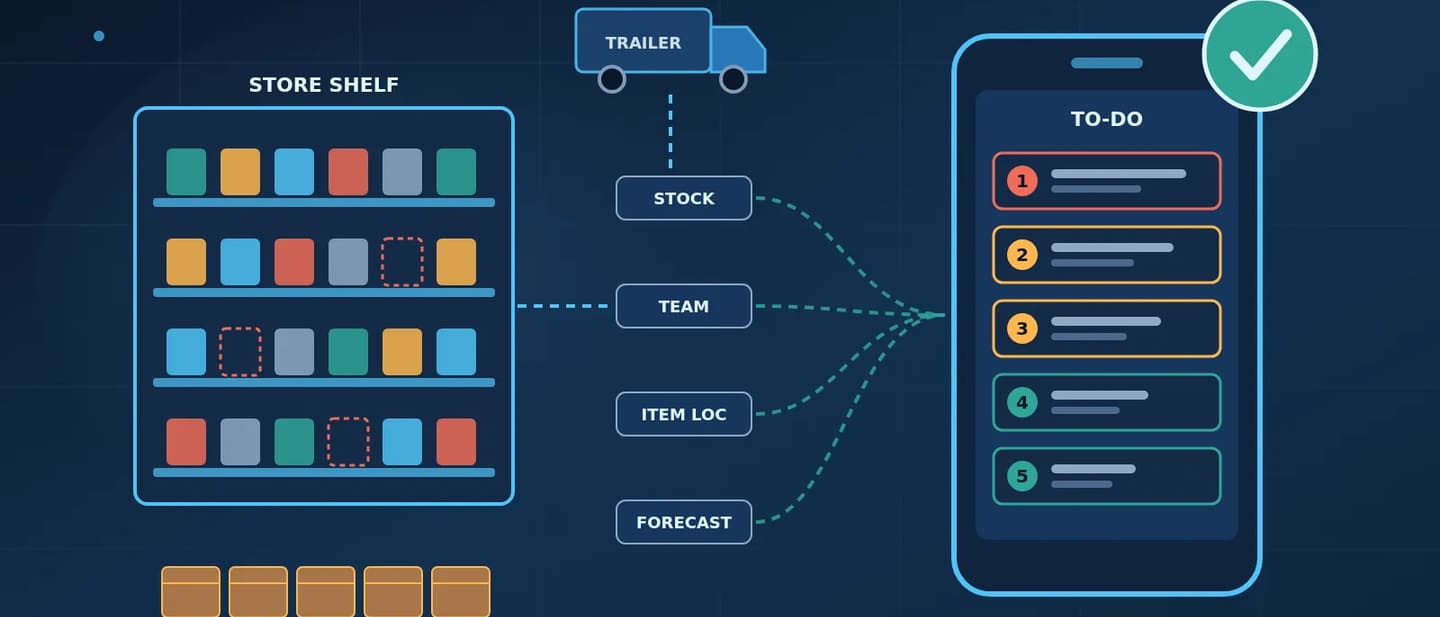
Last week, two pieces of retail news pointed in the same direction. On 14 October 2026, Target updated myDay, the store operations app used by more than 350,000 team members. The app now turns inventory, incoming trailers, team availability, item location, and forecasted sales into a prioritized to-do list. A day later, Lightspeed Commerce announced agentic capabilities in Lightspeed AI that can prepare a purchase order or an inventory transfer, then wait for the retailer's approval before acting.
Neither is a story about a clever chatbot. Both are about something duller but more decisive: operational data you can trust, a clear workflow, and control over every action. For retailers, distributors, pharmacies, and food and beverage chains in Indonesia, that order of work is worth copying.
Target: the work queue first, AI later
According to Target's official post, the myDay update came from the input of more than 50 store leaders and team members. Product management, UX research and design, engineering, and data science teams worked alongside them to answer everyday questions: what needs attention first, and where should a team member go next.
The result has three layers:
- Leader View. A customizable home screen for store leaders covering fulfillment orders, truck unloads, team schedules, and available shelf space. Leaders can pin the metrics that matter most to their store, including a "Needs attention" pin for areas where the store is underperforming. Target stresses that all leaders in a store see the same information from the same source.
- A prioritized task list. The system uses real-time signals to rank work by urgency and value, groups similar tasks, and gives the fastest route to complete them.
- Scan to Divert. When products from the supply chain are scanned, the app helps decide whether they go straight to the shelf or stay in the backroom. The decision draws on inventory movement, sales floor and backroom inventory, product in transit, demand forecasts, and sales-floor capacity.
Target says these efforts add up to more than 2 million team member hours saved annually across its stores, and that Scan to Divert alone has created USD 25 million in value. CX Dive notes that the move is part of a USD 1 billion investment in the guest experience this year.
The interesting part is what is not there yet. The features promised next include assigning and prioritizing tasks within the app, handoff notes, team recognition, and AI-enabled insights. In other words, significant value has already come from clean data and a clear work queue, before the more advanced AI layer has shipped.
Lightspeed: the agent prepares, a human decides
Lightspeed, the POS and payments platform for retail, golf, and hospitality businesses in more than 100 countries, approached the problem from another angle. On 15 October 2026, the company introduced agentic capabilities that reason across catalog, inventory, sales, and purchasing data across locations. The agent can spot low-stock products, prepare purchase orders, update product data, tag unsold items for clearance, or plan an inventory transfer toward locations where demand signals are strongest.
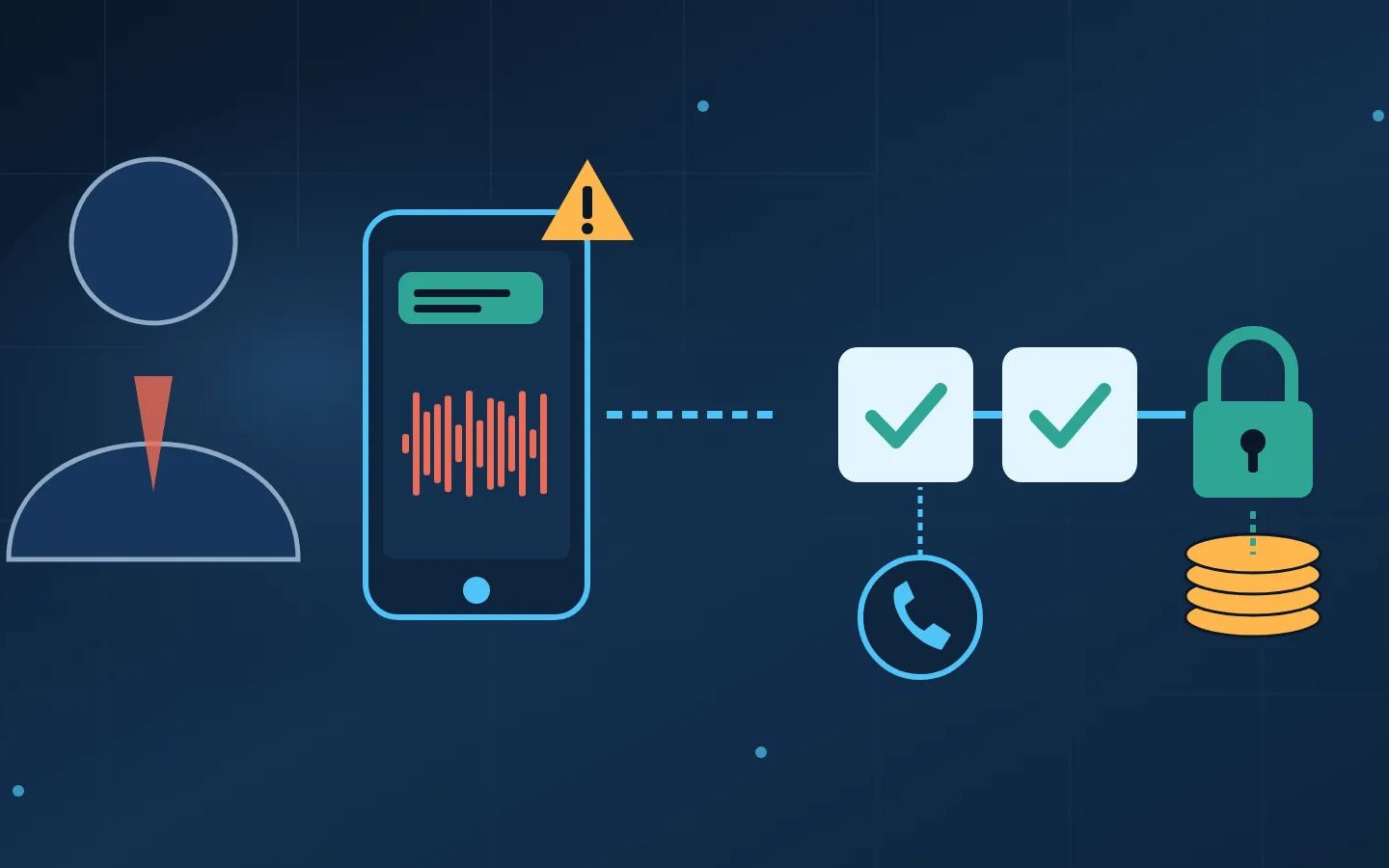
Control is designed in from the start. Before any change is made, the agent shows a preview of the action and waits for the retailer's explicit approval. Every action is recorded in an audit log. Lightspeed CTO Bhawna Singh put it this way: the value of an AI agent comes from the context it has about the business and its ability to work within the systems merchants already use every day. The capability is still an opt-in beta for select customers.
Alpha Modus: test in real stores, write down data ownership
The third piece of news came from grocery. On 15 October 2026, Alpha Modus signed a six-month beta program for its ARIA platform across three Greer's Markets stores in Alabama, with possible expansion to up to 29 stores. ARIA is designed to bring together data that is usually scattered: camera data, POS transactions, inventory and ordering records, pricing and promotions, product information, store layouts, and shrink and waste data, working with existing systems as much as possible rather than replacing them.
One contract detail stands out. Alpha Modus retains ownership of ARIA, its models, knowledge base, and the improvements developed during the program. Greer's retains ownership of its proprietary operational data. A split like this should be written down at the start, not negotiated after a pilot succeeds.
The same pattern from three directions
Across the three stories, the pattern is consistent:
- AI is only as good as its operational data. Target's work queue can only rank tasks correctly if inventory, item location, schedules, and forecasts are accurate.
- Value shows up at daily decision points. Shelf or backroom, which task first, which item to reorder. Not on a dashboard opened once a week.
- Actions need a preview, an approval, and a trail. An agent that can create purchase orders is an agent that can make expensive mistakes.
- Limited pilots with clear measures. Three stores, six months, then an evaluation.
What it means for organizations in Indonesia
Many retail and distribution businesses in Indonesia run stores with a POS that is separate from the warehouse system, stock that is reconciled in spreadsheets, and daily instructions sent through group chats. In that setting, adding an AI agent only speeds up decisions based on the wrong data. We have seen the pattern in a public case: Ruparupa and Kawan Lama Group could only move from weekly to hourly sales reports once online and store data were brought together.
Six practical steps to start with:
- Pick one expensive daily decision. For example, whether incoming goods go to the shelf or the backroom, when to reorder, or when to move stock between branches. Count how often that decision goes wrong and what it costs.
- Audit the data behind it. Compare system stock with physical stock, check whether item locations are recorded, and whether shift schedules and sales forecasts are available from one source. The gaps here are the first piece of work, not the AI model.
- Build the work queue before the agent. Simple, transparent priority rules often deliver results on their own. AI can be added once the team trusts the order of its tasks.
- If you use an agent, set limits on its authority. Require previews and approvals, keep an audit log, and cap the order value or types of change an agent may prepare. We cover agent cost and control in production AI agents.
- Write data ownership and an exit plan into the contract. Who owns the operational data, who owns the models and their improvements, and how data is returned if the partnership ends. The link to open data formats is in zero-copy and the exit plan.
- Pilot in a few stores with a baseline. Record labor hours for routine tasks, on-shelf out-of-stock rates, and the time from goods arriving to being displayed. Without before-and-after numbers, savings claims are hard to prove.
How MarkasDev helps
MarkasDev works as a Technology Partner for operational reliability, in three phases:
- Diagnose: map store and warehouse operating decisions, their data sources, data gaps, and the integration points between POS, warehouse, and scheduling, then set realistic priorities.
- Deliver: build the data integration, the work queue, and, once ready, agents with previews, approvals, and audit logs, with written milestones and acceptance criteria.
- Operate: a retainer with SLAs and monitoring to keep data quality and workflows running. We explain how this differs from fix-when-broken support in Maintenance vs Operate.
If your store teams are still guessing which work comes first, book a Diagnose session to map your data and workflows before investing in AI.
Sources
- Target, "How Target is Creating Smarter Tools to Make Stores Simpler to Run" (14 October 2026): https://corporate.target.com/news-features/article/2026/10/store-team-tech-tools
- Retail Dive, "Target wants more efficient stores. An upgraded employee app could help." (14 October 2026): https://www.retaildive.com/news/target-upgrades-store-operations-app-employees/832989/
- CX Dive, "Target's operations app updates let associates spend more time with customers" (14 October 2026): https://www.customerexperiencedive.com/news/targets-operations-app-updates-let-associates-spend-more-time-with-custome/833038/
- Lightspeed Commerce, "Lightspeed AI Expands From Insights to Action With New Agentic Capabilities for Retail" (15 October 2026): https://www.prnewswire.com/news-releases/lightspeed-ai-expands-from-insights-to-action-with-new-agentic-capabilities-for-retail-302908980.html
- Alpha Modus, "Alpha Modus Signs ARIA Beta Agreement with Greer's Markets" (15 October 2026): https://www.globenewswire.com/news-release/2026/10/15/3381613/0/en/alpha-modus-signs-aria-beta-agreement-with-greer-s-markets.html