Most modern applications are not built from scratch. They are assembled from dozens—sometimes hundreds—of third-party libraries. That is efficient, until an ordinary-looking package version quietly delivers malware to developer laptops and CI/CD pipelines.
On 31 March 2026, two npm releases of Axios (axios@1.14.1 and axios@0.30.4) injected a malicious dependency, plain-crypto-js@4.2.1, that downloaded a remote access trojan. Axios is a JavaScript HTTP client with, according to Microsoft Threat Intelligence, more than 70 million weekly downloads. CISA published an official alert on 20 April 2026. This is not “an npm problem”—it is a mirror for every organisation that consumes open source without inventory and without install-time controls.
A healthy software supply chain is not about banning open source. It is about knowing what enters your build, when upgrades are allowed, and who owns the risk when packages install in CI.
This article summarises facts from primary sources (CISA, Microsoft, the 2026 SBOM guidance) and translates them into practical steps for organisations in Indonesia—mapped to Diagnose, Deliver, and Operate.
What happened with Axios on npm
The attack rode a dependency, not Axios application logic
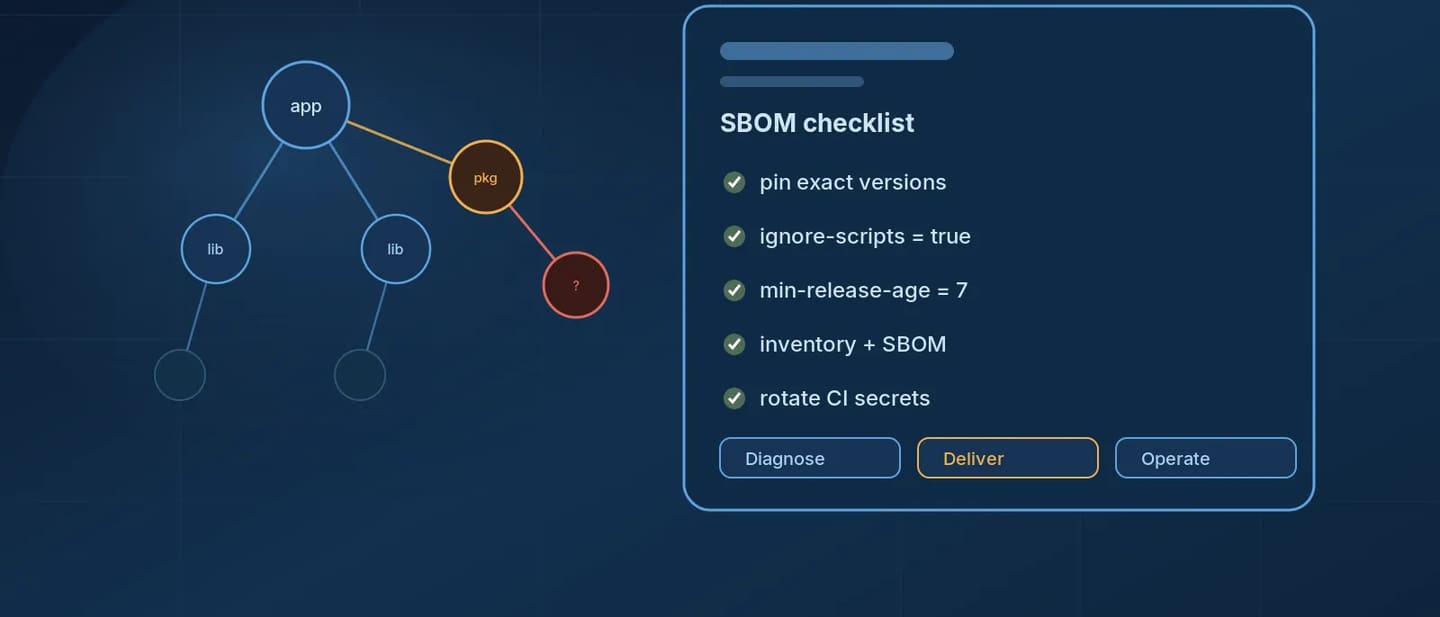
Microsoft’s analysis (1 April 2026) highlights a pattern operations teams should memorise: Axios application logic was not substantively rewritten. Instead, a fake dependency triggered an install-time (postinstall) script. When npm install or npm update ran—on a laptop or in CI—a second-stage payload was fetched from actor infrastructure. Microsoft attributed the activity to Sapphire Sleet, a North Korean state actor.
CISA recommends downgrading to safe versions axios@1.14.0 or axios@0.30.3, deleting node_modules/plain-crypto-js/, rotating credentials that may have been exposed (VCS tokens, CI/CD secrets, cloud keys, npm tokens, SSH keys), monitoring unexpected child processes during install, and blocking related domains.
Practical controls CISA and Microsoft emphasise
- Pin package versions to known-safe releases; avoid caret/tilde ranges that auto-upgrade.
- Set ignore-scripts=true in .npmrc so lifecycle scripts do not run by default.
- Set min-release-age=7 so brand-new packages cannot install until they are seven days old.
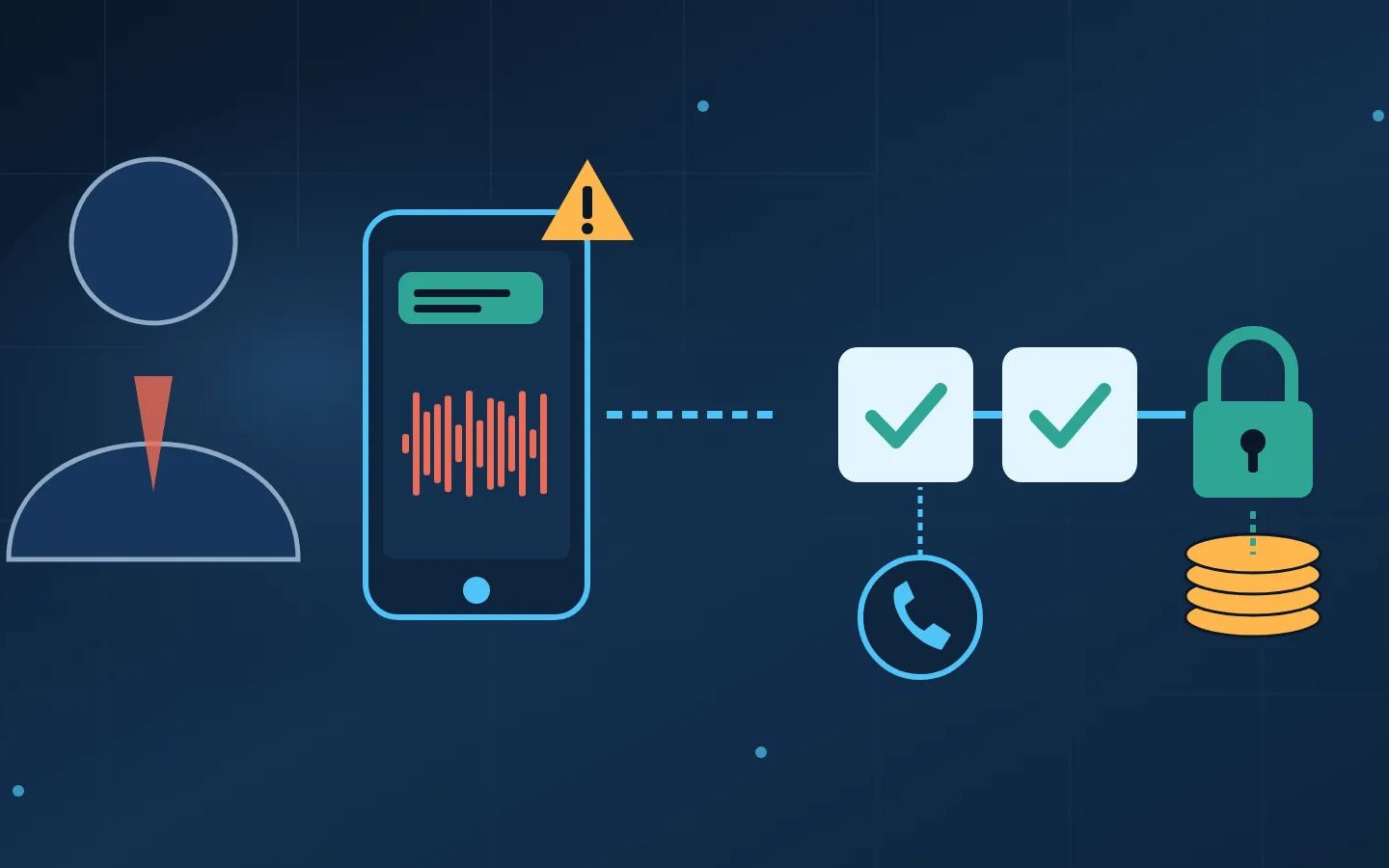
- Mandate phishing-resistant MFA on developer accounts and critical platforms.
- Review CI/CD logs and developer machines that may have installed compromised versions; rotate secrets for affected jobs.
These controls sound technical, but the impact is operational: without pin policies and install monitoring, one automated update can open a path toward production through the build pipeline.
Wider lessons from CISA in 2026
Open source needs an approval process, not blind trust
On 30 July 2026, CISA published Open Source Software: Security Principles and Practices. The guide stresses that OSS is a building block across critical sectors, yet OSS consumers remain responsible for security updates across the lifecycle. CISA urges federal agencies—and the same practice helps any organisation—to establish a process to review and approve OSS that balances mission needs with risk tolerance.
The guidance also recalls Log4Shell and XZ Utils: organisations must understand dependencies embedded in their software. Software asset inventories and SBOMs answer a basic question: what is running, and what does it depend on?
SBOM 2026: an ingredients list you can act on
A day earlier (29 July 2026), CISA with the NSA, FBI, and international partners released 2026 Minimum Elements for a Software Bill of Materials (SBOM), updating and replacing the NTIA 2021 minimum elements. An SBOM is an “ingredients list” for software; organisations should request, generate, and analyse SBOM data with available tools.
The 2026 minimum elements include, among others, SBOM generation context, component identifiers, version, hash, license, component producer, and dependency relationships. For AI and SaaS, additional elements may be needed—but the starting point remains the shared minimum set.
| Practice |
Why it matters after Axios |
| Inventory + SBOM |
Find who uses axios / plain-crypto-js |
| Pin + upgrade review |
Stop auto-upgrade to malicious releases |
| ignore-scripts + CI monitoring |
Cut silent postinstall execution |
| Secret rotation |
Limit blast radius if a laptop/CI was hit |
What this means for organisations in Indonesia
Many Indonesian organisations—private firms, regional SOEs (BUMD), healthcare facilities, logistics operators, and local finance institutions—build portals, APIs, and operational apps on Node.js, Python, or Java. External vendors often deliver artefacts that “already work on a laptop”. Without dependency inventory requirements and pipeline controls, supply-chain risk becomes operational and reputational risk, not merely an “IT team” issue.
- For procurement: require an SBOM or a primary dependency list with every release—not only a feature demo.
- For internal teams: set pin policies and a release-age window before packages enter staging.
- For CI/CD: restrict install scripts, alert on anomalous egress during builds, and rotate secrets routinely.
- For vendors: write acceptance criteria for supply-chain controls—not only “feature complete”.
If you are already tightening AI agent access boundaries or security-by-design for government systems, supply chain is the same foundation: without inventory and install controls, application-layer controls are easy to bypass. See also AI agent access limits and security by design in SPBE.
From Diagnose to Operate: a checklist you can start this week
Start with simple questions: which apps use a package manager? Who may change package.json / the lockfile? Does CI run lifecycle scripts? Is there a dependency inventory for critical services? A paid Diagnose engagement clarifies scope, risk, and options before security-tool budgets are spent.
Deliver — make controls part of acceptance
In Deliver, write testable acceptance criteria: lockfile required; versions pinned; SBOM or inventory generated per release; pipeline uses npm ci --ignore-scripts (or equivalent) unless there is a written exception; secrets are not left on long-lived runners without rotation. Custom software and integrations shipped without these criteria can pass a demo and fail during an incident.
Operate — monitor, patch, and rehearse response
In Operate, supply chain joins the retainer rhythm: watch advisories, test patches in staging, keep a baseline of normal build behaviour, and keep a credential-rotation playbook ready. CISA notes that automation—including frontier AI models—has increased both vulnerability discovery and patch speed; organisations need equally fast paths to test and apply fixes without breaking services.
Conclusion
The 2026 Axios npm incident shows that brand trust in a popular package does not replace install-time control. CISA’s 2026 OSS and SBOM guidance gives the same frame for private and public sectors: inventory, approval, pinning, monitoring, and responsible participation in the ecosystems you consume.
If you want to map dependency exposure and write supply-chain acceptance criteria for operational systems, contact MarkasDev for Diagnose—start with inventory and pipelines, not a shopping list of tools.