For years, JKN (national health insurance) claim files at many Indonesian hospitals followed the same routine: print the documents, sign them by hand, scan them to PDF, and upload. That routine is being closed down. On 30 July 2026, the Ministry of Health, together with the Corruption Eradication Commission (KPK), the Ministry of Home Affairs, BPJS Kesehatan, and the National Cyber and Crypto Agency (BSSN), signed a Joint Circular (SEB) on accelerating electronic medical records (RME) integrated with SATUSEHAT in the management of JKN claims.
KPK stated the direction plainly: electronic medical records become the only valid, complete, and auditable source of JKN claim documents. For hospital directors, heads of district health offices, and managers of regional public hospitals (RSUD), this is no longer an ordinary digitalisation project. It is about cash flow.
What the Joint Circular sets out
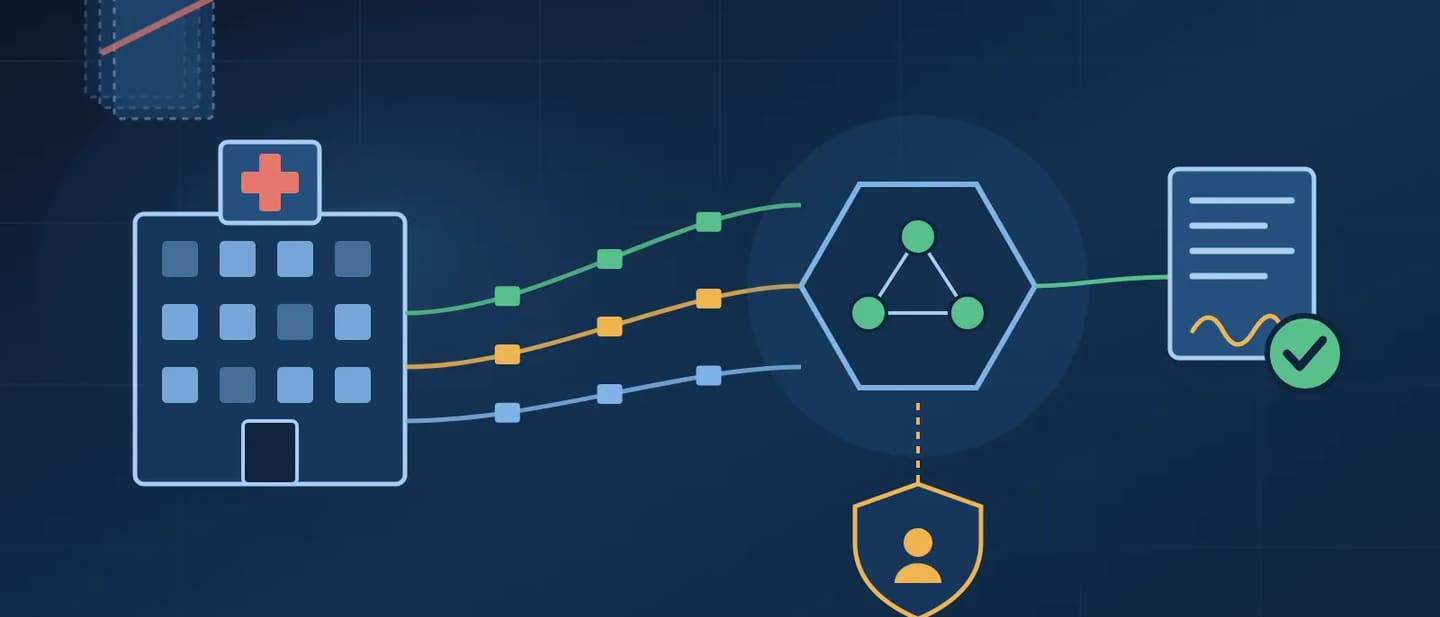
According to the Ministry of Health press release, the circular is the national guideline for hospitals to use NIK-based (national ID number) electronic medical records integrated with SATUSEHAT as the electronic documents supporting JKN claims. A summary of the circular compiled by MedMinutes lists three interlocking obligations for referral hospitals (FKRTL):
- NIK as the single identity. Every patient record entry must be validated against an NIK linked to the civil registry (Dukcapil).
- Certified electronic signatures on claim documents. Medical record documents used for claims, with the medical resume and discharge summary named explicitly, must be signed with a certified electronic signature (TTE) by an authorised doctor or health worker whose identity is validated by NIK. Government hospitals use certificates from BSrE-BSSN; private hospitals use a licensed electronic certification provider (PSrE).
- Sending data to SATUSEHAT. Each patient's record is sent complete, accurate, valid, and on time. The electronic claim documents are exchanged through the Ministry of Health's E-Klaim application.
The phases, according to the same summary and a BVK review:
|
Initial phase |
Full phase |
| Starts |
Claims for August 2026 services |
Claims for June 2027 services |
| Who |
Hospitals with ready infrastructure and pilot sites |
All JKN claim submissions |
| PDF |
Still allowed for hospitals not yet ready |
No longer the basis for verification, except in set conditions |
The exceptions are narrow: information system outages, documents the medical record system cannot yet hold, network limitations proven by a certificate letter, and services in areas without facilities that meet requirements. Pending claims, disputed claims, and audit corrections for service months before the switch may still use PDF.
How ready is the ecosystem
In a Liputan6 report, KPK Deputy for Prevention and Monitoring Aminudin said around 2,400 hospitals had sent data for the six core medical record services to SATUSEHAT by May 2026. The period from August 2026 is used for system adjustments, test data submissions, rolling out electronic signatures, and simulating electronic claims. If the country is judged ready, the "No RME, No Claim" policy is targeted to apply in full in 2027.
On the technical side, the SATUSEHAT documentation for the BPJS Kesehatan claims module was updated to version 2 on 24 August 2026, adding member eligibility data among other changes. When we opened it on 5 October 2026, the module was still marked as under development and available only in the Sandbox environment. The flow is based on HL7 FHIR: the visit (Encounter), clinical data, charges (ChargeItem), and Invoice are sent to SATUSEHAT; E-Klaim validates the claim using the Encounter ID; and BPJS Kesehatan's purification and verification results come back through a webhook.
Facts, interpretation, and limits
The facts: five institutions have signed the policy direction, the transition is under way, and June 2027 is written down. What is not yet certain: when the claims module moves from Sandbox to production for every hospital, and the outcome of the national evaluation that decides full enforcement.
Our interpretation: once PDF stops being the basis for verification, every visit whose data failed to send, whose NIK does not match, or whose resume has not been signed electronically can become a held claim. Integration problems that used to stay hidden inside the IT team will show up in the financial statements. That is why preparation needs to be led jointly by the board, finance, medical records, HR, and IT.
Six steps before June 2027
- Measure the data gap every month. Of all JKN visits, how many Encounters have been sent completely to SATUSEHAT, how many failed, and why. This number is your baseline before buying or replacing anything.
- Clean up identities, including health workers. Patient NIK validation is often discussed, but electronic signatures also require the signer's NIK to be validated. That is HR data work, and it is often found to be messy only when certificate applications begin.
- Start electronic signatures with two documents. The medical resume and discharge summary are named explicitly. List the signers, obtain certificates through BSrE or a suitable PSrE, and make sure a private hospital's information system (SIMRS) is not locked to a single provider.
- Treat SIMRS–SATUSEHAT–E-Klaim as a critical integration. It needs clear interface contracts, a queue for data that fails to send, retries that do not duplicate data, and logs that can be traced per Encounter. Test in the Sandbox now, not just before the deadline. We discuss lessons from this national-scale integration in our SATUSEHAT public case analysis.
- Write outage procedures that produce evidence. The PDF exceptions only apply when the condition can be proven. Record outage times, affected systems, tickets to the network provider, and certificate letters where required. Without evidence, a technical outage can turn into a claim dispute.
- Monitor it like cash flow. Build a simple daily report: claims ready to send, held for data, held for signatures, and awaiting a BPJS Kesehatan response, each with a clear owner.
One more note: health data is specific (sensitive) personal data. The data protection obligations we covered in the PP 33/2026 countdown apply to every one of these new connections.
How MarkasDev helps
- Diagnose: map the claim flow from registration to the BPJS Kesehatan response, measure the data and signature gaps, and set a realistic order of fixes before June 2027.
- Deliver: build or repair the SIMRS connections to SATUSEHAT and E-Klaim in milestones with written acceptance criteria, such as the share of Encounters sent and retry times, through our systems and API integration service.
- Operate: monitor submission queues, failures, and held claims under an agreed SLA, so problems are visible before they become arrears.
If your hospital or health office wants to know how far it is from a "No RME, No Claim" world, request a Diagnose through our contact page. We start from last month's claim data, not from a product pitch.
Sources
- Ministry of Health (Secretariat General), 30 July 2026: Strengthening JKN claim governance through RME integration with SATUSEHAT (Indonesian)
- Liputan6, 31 July 2026: From August 2026, hospitals urged to adopt electronic JKN claims to prevent fraud (Indonesian)
- MedMinutes, updated 12 September 2026: Certified e-signatures required for JKN claim documents, the four-agency Joint Circular (Indonesian)
- BVK, 16 September 2026: No EMR, No Claim, hospitals need to prepare for the JKN claim transformation (Indonesian)
- SATUSEHAT Platform: Health financing, BPJS Kesehatan claims (V2, 24 August 2026, Indonesian)
- Ministry of Health: How healthcare facilities and RME providers integrate with SATUSEHAT (references Health Minister Regulation 24/2022 on Medical Records, Indonesian)