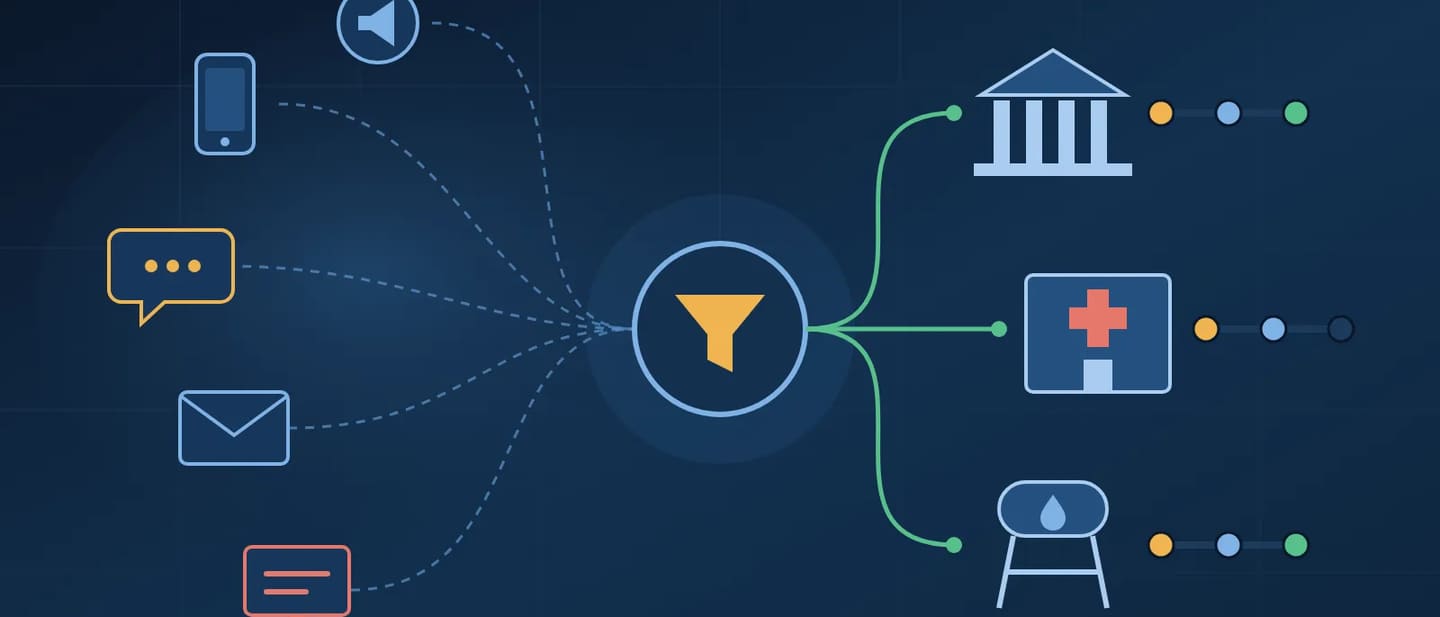
Many local governments have more than one door for complaints: a form on an agency website, a WhatsApp number, social media accounts, an app built by one department, even a suggestion box at the counter of a regional hospital. Each door looks responsive, yet citizens do not know where to go and leaders never see the full picture. On 29 September 2026, the central government made the direction clear: SP4N-LAPOR! becomes the main complaint channel for public services.
This article summarises what has changed according to the official sources and news reports we read, then translates it into operational steps for local governments, their departments, regional hospitals, and other public bodies that serve citizens.
The core problem in complaint handling is rarely the app. It is the flow: who receives a complaint, who decides, and when a complaint is truly considered resolved.
What happened on 29 September 2026
According to ANTARA, the Ministry of Communication and Digital Affairs (Komdigi), the Ministry of Home Affairs, the Ministry of Administrative and Bureaucratic Reform (PANRB), the Ombudsman of the Republic of Indonesia, and the Presidential Staff Office signed a memorandum of understanding on managing SP4N-LAPOR! as the common application for public service complaints.
Komdigi shared several figures at the event:
- From 2021 to September 2026, SP4N-LAPOR! received more than 1.1 million complaints.
- The system is used by 718 institutions: 546 local governments, 119 ministries and agencies, and 53 state-owned enterprises and other institutions.
- Uptime up to September 2026 was recorded at 98.76 percent.
Komdigi named four areas it will strengthen: infrastructure and application reliability, development aligned with SPBE (Indonesia's e-government system) technical standards, data interoperability through the Government Service Liaison System (SPLP), and public communication.
According to ANTARA quoting the Ombudsman, the memorandum's scope includes using SP4N-LAPOR! as the main complaint channel at ministries, agencies, local governments, and other public bodies within their authority. The parties also agreed to monitor and follow up complaints that surface on social media and other public channels that attract public attention.
The signals came earlier
This direction is not a surprise. According to the About LAPOR! page, LAPOR! was designated as the national complaint management system (SP4N) under Presidential Regulation 76/2013 and PANRB Ministerial Regulation 3/2015. On 5 August 2026, during a monitoring and evaluation session on complaint handling in local governments, the Ministry of Home Affairs' Inspectorate General stated that SP4N-LAPOR! had been designated as the common complaint application under Presidential Regulation 95/2018 on SPBE. This was reported by the official Sumenep Regency website and InfoPublik.
The ministry's message at that session was firm:
- Local governments should integrate their existing complaint apps into SP4N-LAPOR! and stop building similar apps that run on their own.
- Performance in managing SP4N-LAPOR! is part of the assessment instruments for Bureaucratic Reform, Integrity Zones, and public service maladministration.
- A sub-activity for Public Complaint Management has been set in SIPD (the regional government information system) and can be used from the revised 2026 regional work plan (RKPD).
| Date (2026) |
Event |
| 5 August |
Home Affairs asks local governments to integrate complaint channels into SP4N-LAPOR! and stop similar apps |
| 29 September |
Five institutions sign an MoU making SP4N-LAPOR! the main complaint channel |
| 5 October |
The lapor.go.id site shows two system versions: 3.5 and 4.0 |
A fast response is not the same as resolution
The PANRB Minister, quoted by ANTARA, said the government's response rate to complaints rose from about 81 percent to 85 percent. She also cautioned that this figure measures how quickly the government responds and starts follow-up, not how quickly complaints are resolved.
This lesson applies outside government too. A dashboard that only counts "replied" can look green while the same problem keeps returning at the counter. The Ombudsman made a similar point: success means the resolution actually answers the problem.
What it means operationally
On the lapor.go.id site, the flow promised to citizens is written plainly: a report is verified and forwarded to the responsible institution within 3 days, the institution follows up and replies within 5 days, and the citizen can respond to the reply within 10 days. That promise can only be kept if the internal flow at the receiving institution is just as clear.
When we checked on 5 October 2026, the lapor.go.id homepage said the system is available in version 3.5 and a new version 4.0. Ten institutions, including PT PLN, PT KAI, the West Java Provincial Government, and Tangerang Regency, already use version 4.0, while more than 700 institutions still manage complaints on version 3.5. In other words, most institutions still have migration work ahead.
The 98.76 percent uptime figure is also worth reading calmly. As a simple calculation, 1.24 percent of a year is roughly 108 hours. A strong central channel still needs a plan on the institution's side: what counter staff and administrators do when the channel cannot be reached, and how complaints arriving through other routes are recorded without being lost.
Six steps for local governments, regional hospitals, and public bodies
- Inventory every complaint door. List each form, WhatsApp number, social media account, department app, and complaint module inside service systems such as a hospital information system (SIMRS). Decide which ones close and which remain as entry points that forward to SP4N-LAPOR!.
- Map the internal flow and deadlines. Assign an administrator per unit, disposition rules, and an escalation path aligned with the 3, 5, and 10 day flow. Measure time to resolution, not only time to reply.
- Integrate instead of copying by hand. If your unit has its own ticketing system or service app, ask the SP4N-LAPOR! administrators which official integration route is available, for example through SPLP. Do not rely on double entry that leaves the two systems showing different statuses. For technical help, see our systems and API integration service.
- Protect the reporter's identity. SP4N-LAPOR! offers anonymous and confidential options. Make sure internal systems do not leak that identity back: limit access, log who opens a report, and never forward reporter details through chat groups.
- Prepare a fallback mode and the migration. Write a procedure for when the channel cannot be reached, and schedule readiness for version 4.0: unit master data, administrator accounts, and staff training.
- Turn complaint data into improvements. Every month, group recurring complaints and bring them to the leadership meeting with one question: which process must change so these complaints stop coming.
We discussed the same principle in data integration before AI in GovTech: a shared application is only useful when the data and flows at each institution are ready to connect.
How MarkasDev helps
- Diagnose: map every complaint channel, disposition flow, and system involved, then produce an integration plan and a list of decisions leadership needs to make.
- Deliver: build the integration or adjust internal systems in milestones with written acceptance criteria, for example complaint status kept in sync without double entry.
- Operate: monitor supporting systems, growing complaint backlogs, and readiness when the channel is disrupted, under an agreed SLA through our Operate service.
If your institution wants to know where to start, request a Diagnose through our contact page. We start from the channels and flows you have today, not from a new app.
Sources